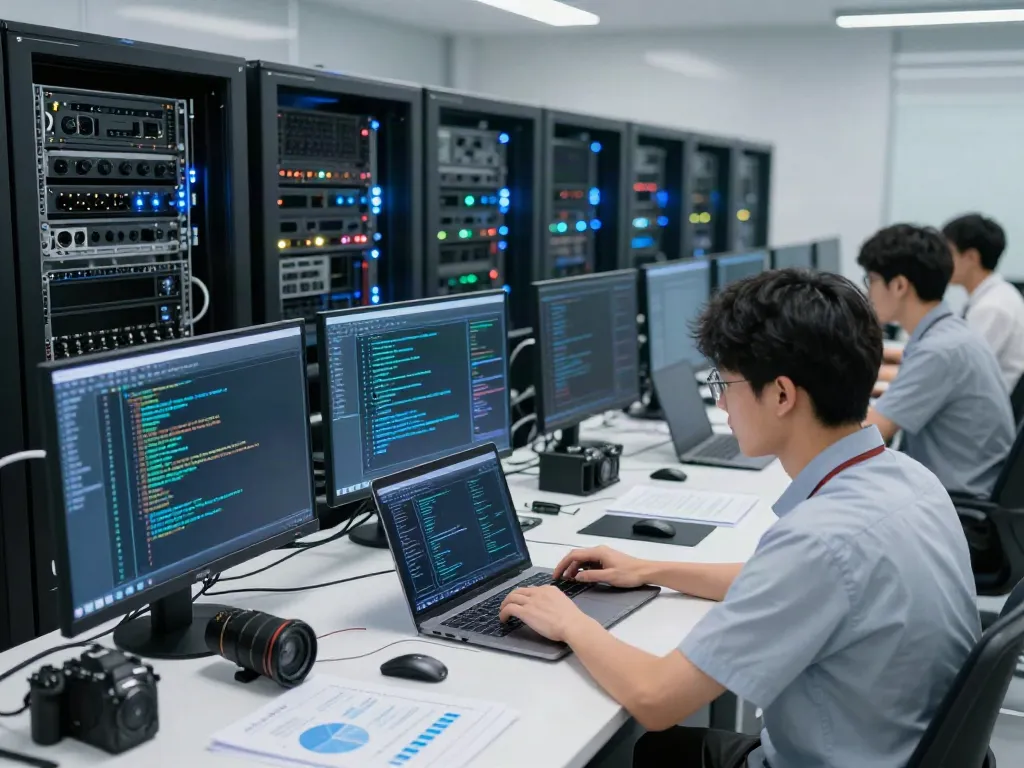
Understanding GPU Computing in the Context of AI
As artificial intelligence (AI) continues to evolve, the importance of powerful computing infrastructure has never been more critical. At the heart of this infrastructure lies GPU computing, a technology that accelerates the processing of complex algorithms and massive datasets. In this article, we will delve deep into the world of GPU computing, its pivotal role in AI development, and how it interfaces with AI token economies and infrastructures.
What is GPU Computing?
GPU computing refers to the use of Graphics Processing Units (GPUs) to perform computations traditionally handled by the Central Processing Unit (CPU). Originally designed to render images and video, GPUs are now recognized for their ability to perform parallel operations, making them a powerful asset in the field of AI and machine learning. This capability allows them to process large blocks of data simultaneously, which is essential for training complex AI models swiftly and efficiently.
The Role of GPUs in AI Model Training
In AI model training, particularly in deep learning, the sheer volume of data that must be processed can be staggering. GPUs excel in this area because they can handle thousands of operations at once, significantly reducing the time needed for training. In tasks such as image and speech recognition, natural language processing, and reinforcement learning, utilizing GPUs can lead to breakthroughs in model performance and accuracy.
Key Differences Between CPUs and GPUs
- Architecture: CPUs are optimized for sequential processing and are equipped with a few cores (typically 4 to 16), whereas GPUs have thousands of smaller cores optimized for parallel processing.
- Efficiency: For tasks that require handling large amounts of data simultaneously, GPUs outperform CPUs by a considerable margin.
- Use Cases: While CPUs are better suited for general-purpose tasks, GPUs are tailored for specific applications like rendering graphics and training AI models.
Power AI Infrastructure and Its Significance
The integration of GPU computing into AI infrastructures is critical for enhancing performance and efficiency. As AI technologies become more embedded in various sectors, the associated power requirements increase immensely. Understanding how power resources can be effectively connected with AI operations is essential to sustaining growth in this area.
Connecting Power Resources with AI Operations
Efficient AI operations rely heavily on a robust power infrastructure. This connection ensures that AI factories—where models are trained and run—have the necessary electricity to operate GPU clusters effectively. By optimizing the allocation of power resources, facilities can adapt to changing demand, enhancing overall operational efficiency.
How Power Plans Influence AI Efficiency
The implementation of specific power plans can significantly affect an AI factory’s efficiency. For instance, power plans designed for variable workloads allow facilities to scale their energy consumption based on real-time processing needs, minimizing waste and maximizing the capacity of GPU resources. This scalable approach is increasingly crucial as businesses embrace AI-driven solutions.
Real-World Applications of AI Infrastructure
The principles of GPU computing and power management extend into multiple real-world scenarios. Companies spanning numerous industries are leveraging these technologies to facilitate everything from agile product development to advanced customer service automation. By integrating GPU computing into their workflows, organizations can streamline operations and enhance innovation.
Participating in the AI Token Economy
The AI Token Economy presents an innovative framework for monetizing AI services. This system relies on the combined capabilities of GPU computing, power infrastructure, and blockchain technology to create a sustainable model for both individual and enterprise stakeholders.
How to Get Involved with 51 AIpower
Participating in the AI Token Economy through platforms like 51 AIpower allows users to contribute to the infrastructure that powers AI factories. This participation can include selecting power plans that align with individual goals and supporting the necessary electricity for their operations. Users can start by choosing an AI Infrastructure Power Plan that suits their needs.
Your Contributions and Rewards Explained
In the AI Token Economy, rewards are calculated based on contributions to GPU computing resources. Participants can earn tokens as AI workloads are processed, directly correlating their power contributions with the operational success of AI services. By leveraging data from these contributions, the platform can transparently assess each participant’s impact and distribute rewards accordingly.
Scaling Participation: From Individual to Enterprise
Whether you are an individual looking to explore the AI landscape or an enterprise aiming to scale operations, the system is designed to accommodate a variety of participants. This scalability ensures that everyone, from hobbyists to large corporations, can find a suitable entry point into the AI Token Economy.
Future Trends in GPU Computing and AI Infrastructure
The rapid advancements in GPU computing and AI infrastructure indicate a dynamic future for the industry. As technology evolves, several trends are emerging that will shape the landscape in the coming years.
Emerging Technologies and Innovations
Technologies such as quantum computing and specialized AI chips are on the horizon, promising to enhance the capabilities of traditional GPU computing. These innovations will likely drive more efficient processing and open new avenues for AI applications, further integrating with existing infrastructures.
Challenges Ahead for GPU-Driven AI
Despite the promising advancements, challenges remain. Issues such as energy consumption, heat management, and the adaptation of existing systems to support GPU architectures need to be addressed. Moreover, as reliance on GPU computing increases, ensuring the sustainability of these infrastructures will be paramount.
The Path Forward: Predictions for 2026 and Beyond
By 2026, it is expected that GPU computing will be deeply entrenched in various sectors, powering cutting-edge applications in healthcare, finance, and beyond. The integration of AI with powerful computing resources will continue to create efficiencies, enabling organizations to harness insights from their data like never before.
FAQs about GPU Computing and AI Infrastructure
What are the main benefits of GPU computing?
GPU computing provides significant advantages over traditional CPU processing, including enhanced speed, parallel processing capabilities, and efficiency in handling large datasets.
How do I choose the right GPU for AI tasks?
Selecting the appropriate GPU involves considering factors such as memory capacity, processing power, and compatibility with specific AI algorithms.
What role do power plans play in AI sustainability?
Power plans are crucial for ensuring that AI operations are sustainable and scalable, linking energy usage to workload requirements and minimizing waste.
Can individuals participate in GPU computing?
Yes, individuals can easily participate in GPU computing by utilizing platforms like 51 AIpower, which offer accessible power plans without requiring technical expertise.
How is reward calculated in the AI Token Economy?
Rewards within the AI Token Economy are calculated based on the actual contributions made by users towards GPU computing resources, measured against AI workloads processed during specific periods.