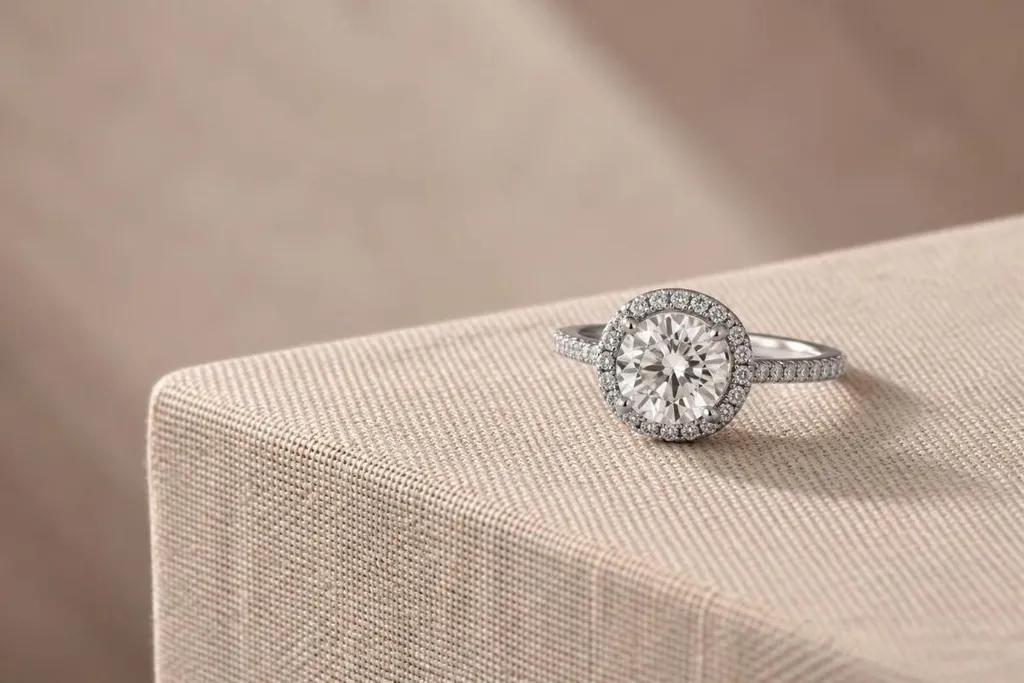
A centre diamond may be the focal point of an engagement ring, but its setting determines much of what the eye actually sees. Few designs demonstrate this as clearly as the halo. By surrounding a lab-grown diamond with a carefully arranged border of smaller stones, a halo can alter its apparent scale, emphasise its shape and give the entire ring a more luminous presence.
Browsing beautiful lab diamond halo rings shows that the style is far more nuanced than simply adding extra sparkle. The proportions of the surrounding diamonds, the outline of the halo and its relationship with the centre stone all influence the finished effect. A successful halo should enhance the main diamond rather than compete with it.
A Halo Changes Perceived Size and Proportion
One of the most noticeable effects of a halo is increased visual coverage. The surrounding diamonds extend the outline of the centre stone, making the overall design appear larger across the finger.
That does not mean a halo is simply a substitute for greater carat weight. The aesthetic is different. A 1-carat lab-grown diamond surrounded by a fine halo can create a detailed, expansive look, while a 2-carat solitaire offers a cleaner expanse of uninterrupted diamond. Someone may prefer the former because they enjoy intricate brilliance, even if their budget comfortably allows for a larger centre stone.
Proportion is crucial. Very large halo stones can reduce the visual distinction between the centre and its surroundings. Smaller diamonds generally create a more delicate transition, helping the eye recognise the centre stone immediately while still increasing the ring's overall presence.
Diamond Shape Defines the Character of the Halo
A halo can reinforce the natural outline of a diamond or subtly change how its shape is perceived.
Round brilliant diamonds paired with circular halos create symmetry and concentrated sparkle. Oval diamonds produce an elongated composition that can visually lengthen the finger, particularly when the halo closely follows the stone's curves. Pear-shaped designs introduce a graceful point and a stronger sense of direction.
Cushion and radiant diamonds offer particularly interesting possibilities. Their combination of straight and softened edges can create a substantial outline without appearing overly rigid. Emerald-cut lab diamonds bring a more architectural quality; pairing their long, stepped facets with smaller brilliant-cut halo stones creates contrast between flashes of light and finer sparkle.
The best pairing depends on whether the wearer wants the halo to quietly frame the centre diamond or become a noticeable design element in its own right.
Halo Design Is About More Than the Top View
Although halos are primarily appreciated from above, the side profile can significantly influence how sophisticated a ring feels.
The height of the centre diamond, the structure supporting the halo and the way the setting meets the band all contribute to the overall proportions. A raised design can give the centre stone greater prominence and may allow more light and visual space around the setting. A lower profile can feel more compact and may suit someone who prefers jewellery that sits closer to the hand.
Shoulder detailing is another consideration. A plain band keeps attention on the halo, while diamond-set shoulders extend the sparkle further around the finger. Combining both can produce considerable brilliance, so balance becomes especially important.
Metal choice also changes the impression. Platinum and white gold can visually merge with the diamonds, whereas yellow or rose gold creates contrast and makes the structure of the ring more apparent.
Think About Everyday Wear and Pairing
A halo engagement ring should be assessed as jewellery intended for regular wear. More diamonds and setting details create additional areas where residue from creams, soaps and everyday products can accumulate, so gentle routine cleaning helps maintain its brightness.
The relationship with a wedding band is worth considering too. Depending on the halo's profile, a straight wedding ring may sit neatly alongside it, while some designs work better with a shaped band.
It is also useful to consider personal style beyond the engagement ring itself. Someone who normally wears minimal jewellery might prefer a restrained halo with a plain band. A wearer accustomed to more decorative pieces may feel entirely comfortable with diamond-set shoulders and a stronger overall presence.
Final Thought
A halo does more than surround a lab-grown diamond with additional stones. It changes the scale, outline and visual rhythm of the entire engagement ring.
The most elegant examples rely on proportion rather than sparkle alone. When the centre diamond, halo, band and setting profile are carefully balanced, the result can feel substantial without becoming excessive—giving the diamond greater presence while preserving the individual shape and character that made it appealing in the first place.